Gastroenterology · USMLE Step 1 and Step 2
Mallory-Weiss Syndrome song
Mallory-Weiss Syndrome - Diagnosis & Management, as a song. Hear the short teaser here. The full song is on YouTube and Spotify.
Mallory-Weiss Syndrome
Key points in this song10
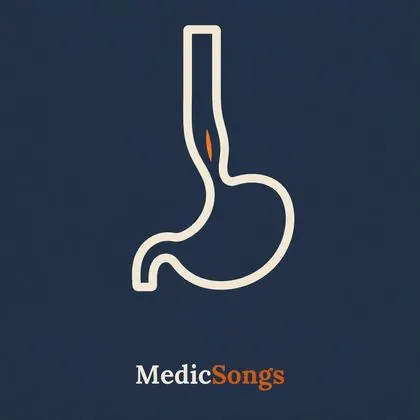
- Mallory-Weiss syndrome is caused by longitudinal mucosal lacerations at the gastroesophageal junction, classically following forceful or repeated vomiting.
- The most common clinical presentation is painless upper GI bleeding (hematemesis) following an episode of retching or vomiting, often in the setting of alcohol use.
- Unlike Boerhaave syndrome, Mallory-Weiss tears involve only the mucosa and submucosa, not full-thickness esophageal rupture.
- Esophagogastroduodenoscopy (EGD) is both the diagnostic and therapeutic modality of choice, allowing direct visualization and endoscopic hemostasis.
- The majority of Mallory-Weiss tears (approximately 90%) stop bleeding spontaneously and resolve with supportive care.
- Risk factors include alcoholism, hiatal hernia, bulimia nervosa, and any condition causing increased intra-abdominal pressure such as severe coughing or seizures.
- Portal hypertension increases the risk of significant hemorrhage in Mallory-Weiss syndrome because of associated coagulopathy and varices.
- The tear is most commonly located on the gastric side of the gastroesophageal junction, not the esophageal side.
- Endoscopic therapies used for persistent bleeding include epinephrine injection, thermal coagulation, and hemostatic clip placement.
- Arterial embolization or surgical oversewing of the bleeding vessel is reserved for refractory cases that fail endoscopic management.
About this song
SubjectGastroenterology
Full song5:20 min
Released28 Sep 2026
ExamUSMLE Step 1 and Step 2